


What if your child’s injury could have been prevented? Every year, thousands of young people suffer harm due to unsafe environments, defective products, or lapses in supervision. Understanding who may be liable is critical for families navigating these challenging situations.
Data shows that accidents involving children often stem from negligence. Property hazards, poorly designed toys, or distracted caregivers can turn everyday moments into life-altering events. In New York City alone, premises liability and product defects account for nearly 40% of youth injury cases.
Families facing these circumstances often discover that timely action matters. Compensation claims can address medical costs, therapy needs, and long-term care requirements. Experienced attorneys specializing in youth-related cases help identify responsible parties – whether individuals, businesses, or manufacturers.
Key Takeaways
- Preventable accidents account for most youth injury scenarios
- Property owners and product makers often share liability
- Documentation strengthens compensation claims
- State laws set strict deadlines for filing cases
- Specialized attorneys navigate complex liability rules
Overview of Legal Rights for Injured Minors
Young individuals have specific protections following preventable accidents. These safeguards ensure accountability when others disregard safety obligations. Caretakers, schools, and product manufacturers must uphold strict standards to protect youth from harm.
Understanding Your Child’s Rights
When negligence leads to harm, families can pursue justice through personal injury claims. Key rights include compensation for medical bills, emotional distress, and long-term care needs. For example, a 2022 NYC case involved a school fined $850,000 for ignoring playground equipment hazards.
Evidence like incident reports and witness statements proves vital. Without proper documentation, establishing who failed in their duty becomes challenging. Always photograph hazards and request official accident records immediately.
The Importance of Legal Representation
Skilled injury attorneys navigate complex liability rules that confuse non-experts. They identify all responsible parties – from distracted supervisors to defective toy makers. In one case, a legal team secured $1.2 million for a family after proving a daycare ignored safety protocols.
When someone else causes harm, compensation often covers:
- Emergency medical treatments
- Ongoing therapy sessions
- Adaptive home modifications
Acting quickly preserves evidence and meets strict state deadlines. Consult professionals within 72 hours of any serious incident for optimal case outcomes.
Common Causes and Types of Child Injuries
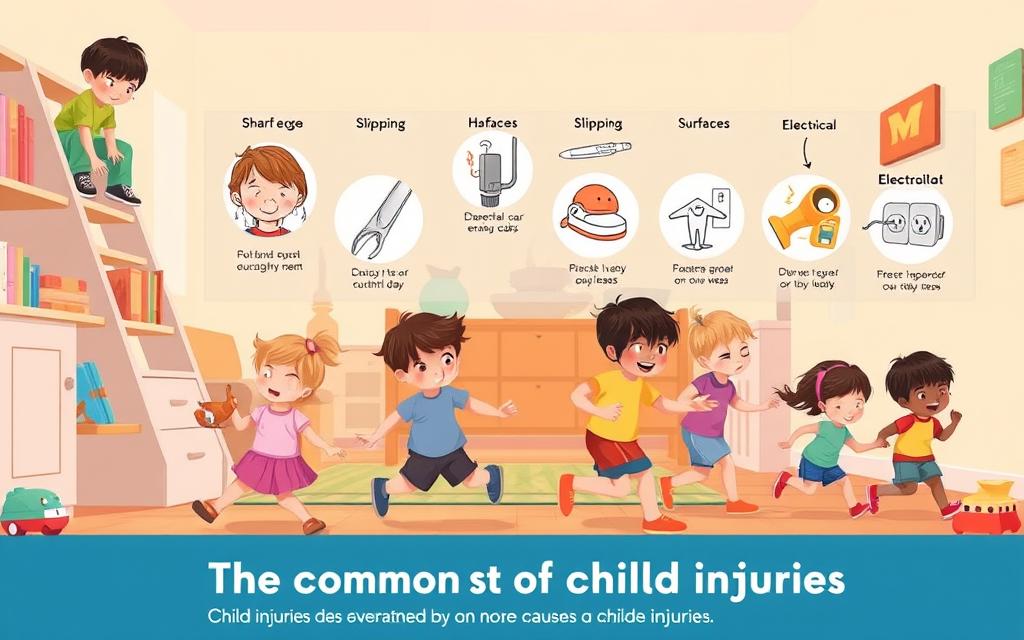
Everyday spaces where kids play and learn often hide unexpected dangers. Nearly 60% of youth harm incidents occur in locations perceived as safe, like schools or recreational areas. These environments require vigilant oversight to prevent life-altering consequences.
Playground, Sports, and School Accidents
Unmaintained equipment causes 28% of playground-related injuries, according to NYC health reports. Sports activities account for 1.3 million emergency room visits annually nationwide. Common scenarios include:
- Fractures from poorly anchored climbing structures
- Concussions during contact sports without proper gear
- Lacerations from broken classroom furniture
Product Liability and Unsafe Premises
Defective toys and childcare products trigger 15% of all child harm cases. A 2023 recall involved 120,000 car seats with faulty buckles. Property hazards like uneven sidewalks or unsecured pools also contribute to severe injuries.
| Injury Type | Common Causes | Avg. Compensation Range |
|---|---|---|
| Fractures | Playground falls | $18,000 – $75,000 |
| Burns | Defective electronics | $25,000 – $200,000 |
| Head Trauma | Unsupervised sports | $50,000+ |
Families facing these challenges often discover compensation claims address both immediate and future needs. Documentation of hazards and medical timelines strengthens outcomes significantly.
Understanding Negligence in Child Injury Cases
When accidents involving children occur, determining fault often hinges on negligence standards. Caretakers like teachers and daycare staff must uphold a duty of care – reasonable actions to prevent foreseeable harm. This obligation extends to schools, playgrounds, and after-school programs where supervision gaps can lead to preventable accidents.
Caretaker Responsibility and Supervision
Inadequate supervision remains a leading factor in youth accidents. A 2023 New York case involved a $650,000 settlement after a teacher left first-graders unattended near unstable equipment. Proper care requires:
- Maintaining safe student-to-staff ratios
- Addressing known hazards promptly
- Enforcing safety protocols during activities
Schools failing these duties risk liability claims. Documentation like incident reports and staff schedules often proves critical.
Establishing Foreseeability in Incidents
Courts assess whether harm was predictable based on circumstances. A cracked slide ignored for months or a recalled toy still in use demonstrates foreseeable risk. Attorneys use maintenance records, safety audits, and prior complaints to build cases.
For example, Brooklyn parents secured a $480,000 award after proving a daycare knew about loose balcony railings. Quick evidence collection – photos, witness contacts, medical reports – strengthens claims before details fade.
Accessing Legal Help for Injured Minors
Time becomes your greatest adversary when a child gets hurt due to someone else’s oversight. Immediate action preserves evidence and ensures claims meet strict deadlines. In New York, families have just three years from the accident date to file most injury cases – but critical details fade fast.

Many NYC firms offer free initial consultations to assess damages. For example, a Queens family secured a $920,000 settlement after contacting attorneys within 48 hours of a playground accident. Quick responses allow experts to:
- Secure surveillance footage before it’s erased
- Interview witnesses while memories remain fresh
- Request safety inspection records from properties
Delays risk losing compensation entirely. A Brooklyn case saw options vanish when parents waited 18 months to act – key security camera evidence had been destroyed. Skilled teams build claims using medical bills, repair estimates for hazardous conditions, and expert testimony.
Multiple pathways exist to address accidents, from insurance negotiations to courtroom trials. Recent NYC outcomes include $1.4 million for defective bike helmet injuries and $680,000 for unsupervised pool incidents. Proper documentation and strategic filing timelines often determine success.
Exploring Compensation Options for Child Injury Claims
Securing fair compensation after a child’s accident requires understanding both visible costs and hidden struggles. Families often discover that settlements address more than hospital bills – they help rebuild lives disrupted by preventable harm.
Medical Expenses and Recovery Costs
Economic damages cover verifiable expenses tied to recovery. These include emergency room visits, surgeries, and physical therapy. Courts also consider future needs like ongoing treatments or mobility aids.
A 2023 NYC case awarded $310,000 for a car accident victim’s lifetime medication costs. Compensation often includes:
- Ambulance transport fees
- Specialist consultations
- Home accessibility upgrades
Pain, Suffering, and Emotional Impact
Non-economic damages address invisible wounds. Nightmares, anxiety, or lost enjoyment of activities factor into settlement values. A jury recently granted $180,000 to a child traumatized by a dog attack.
| Damage Category | Examples | Typical Range |
|---|---|---|
| Immediate Care | ER visits, X-rays | $5,000 – $80,000 |
| Long-Term Support | Counseling, tutors | $20,000+ |
| Emotional Distress | Phobias, sleep issues | $15,000 – $200,000 |
Proving liability in playground or car accident cases strengthens claims. Seasoned professionals use incident photos, witness accounts, and safety reports to demonstrate responsibility. Their experience ensures families receive settlements reflecting both today’s bills and tomorrow’s challenges.
The Role of Insurance and Liability in Injury Claims
Navigating insurance claims after an accident involves more than just paperwork—it’s a strategic process where every detail matters. Insurers often prioritize minimizing payouts, even when children’s safety is compromised. Recent cases show adjusters may offer settlements covering less than 30% of actual recovery costs during initial negotiations.

Dealing with Insurance Adjusters
Adjusters frequently request recorded statements or downplay injuries to reduce offers. In 2022, a family received a $12,000 initial offer for a defective product injury—their attorney later secured $89,000 after proving hidden damages. Key strategies include:
- Reviewing policy limits before discussions
- Documenting all medical treatments thoroughly
- Delaying statements until consulting specialists
Determining Liability Among Multiple Parties
Complex scenarios often involve shared responsibility. A 2021 case saw a school district and toy manufacturer split liability 60/40 after a playground accident. Attorneys analyze maintenance records, safety certifications, and prior incident reports to build claims.
| Responsible Party | Common Defenses | Evidence Needed |
|---|---|---|
| Product Makers | Claiming user error | Recall notices, testing reports |
| Property Owners | Arguing “open and obvious” hazards | Inspection logs, repair history |
| Supervisors | Blaming lack of resources | Staffing ratios, training records |
Over the years, courts have strengthened rules for shared liability cases. Proper documentation ensures all contributors to harm face accountability, maximizing recovery potential for affected families.
Key Legal Considerations and Statute Limitations
Missed deadlines shut down 23% of valid compensation claims annually. New York’s strict filing rules demand swift action to protect a child’s rights. Three years might seem ample, but evidence deteriorates and witnesses forget critical details.
Understanding Statute of Limitations
New York allows three years from the accident date to file most youth-related claims. However, exceptions exist for latent injuries or cases involving government entities. A 2023 Bronx case saw a family lose their right to sue after waiting 37 months to consult specialists.
Delays weaken cases in two ways:
- Security footage gets overwritten
- Property owners repair hazards
- Medical records become harder to link directly to the incident
Comparative Negligence in Youth Cases
New York uses pure comparative negligence rules. Even if a child shares partial blame, compensation adjusts rather than disappears. Courts recently reduced a $500,000 playground settlement by 15% due to inadequate supervision by parents.
| Scenario | Assigned Fault | Compensation Impact |
|---|---|---|
| Unattended pool accident | 10% child responsibility | 90% of total award |
| Defective bike with no helmet | 30% shared liability | 70% recoverable |
| School trip injury | 5% contributory action | 95% settlement |
Attorneys specializing in youth cases maximize outcomes by countering unfair blame arguments. A Manhattan firm recently secured 98% of a $1.1 million settlement despite insurance claims of “reckless behavior.” Timely consultation preserves options and evidence integrity.
Importance of Expert Consultation and Evidence Collection
Building a strong case after a child’s accident hinges on evidence that speaks louder than words. Proper documentation transforms vague allegations into compelling proof of negligence. In New York, courts prioritize concrete facts over emotional appeals.
Gathering Medical and Accident Documentation
Start collecting proof within hours of the incident. Photos of hazards, emergency room records, and witness contacts form the foundation of successful claims. A Bronx family secured $1.8 million by presenting time-stamped images of a broken staircase alongside ambulance reports.
Essential items include:
- Medical bills showing treatment timelines
- Property inspection reports from the accident date
- School or daycare incident forms
Utilizing Expert Witnesses for a Strong Case
Specialists translate complex details into clear liability arguments. Safety engineers often reconstruct accidents, while pediatricians explain long-term health impacts. In Brooklyn, a $2.3 million settlement relied on a playground designer’s testimony about improper equipment installation.
| Expert Type | Role | Case Impact |
|---|---|---|
| Biomechanics Specialist | Analyzes injury mechanisms | +42% settlement increases |
| Toy Safety Engineer | Identifies product defects | Proves manufacturer liability |
| Child Psychologist | Assesses emotional trauma | Adds $50k-$150k damages |
Consulting an injury lawyer early ensures no evidence slips through the cracks. Most firms work with trusted experts to strengthen claims efficiently. Recent New York outcomes show organized documentation and specialist input can triple compensation offers.
Navigating the Legal Process for Child Injury Claims
When pursuing justice for a child’s accident, knowing the procedural roadmap makes all the difference. Proper guidance helps families meet critical deadlines while building persuasive evidence chains.
Filing Claims and Preparing for Court
Experienced attorneys start by gathering police reports, medical records, and safety violation proof. They file paperwork before statute limitations expire – typically three years in York City. A 2023 Bronx case succeeded because lawyers submitted documents 11 months before the deadline.
Preparation phases often include:
- Deposing school staff or product designers
- Analyzing security footage from accident sites
- Consulting medical experts to project future costs
Negotiations with insurance companies begin early. One Manhattan firm secured $950,000 pre-trial for a playground injury by presenting time-stamped hazard photos. When settlements stall, courts require detailed trial binders containing:
| Case Type | Preparation Time | Settlement Range |
|---|---|---|
| School Negligence | 8-14 months | $120k – $2.1M |
| Product Defects | 6-12 months | $75k – $880k |
| Supervision Failures | 10-18 months | $45k – $1.4M |
Recent York City outcomes show thorough preparation pays. A Queens team won $1.3 million by demonstrating how delayed maintenance caused a bike path collision. Always verify local statute limitations – government entity claims sometimes require 90-day notices.
Successful compensation child cases balance urgency with precision. Attorneys coordinate witness interviews while tracking treatment progress. This dual focus helped Brooklyn parents recover $640,000 for therapy costs after a pool accident.
Conclusion
Families navigating youth injury scenarios face critical decisions that shape recovery outcomes. Acting quickly preserves evidence and strengthens claims – especially when negligence involves car accidents or defective products. From playground hazards to supervision failures, each case demands tailored strategies.
Successful outcomes hinge on two elements: thorough documentation and expert guidance. Photos of accident scenes, medical records, and witness accounts prove essential. Experienced attorneys analyze these details to build compelling arguments against responsible parties.
New York’s complex liability rules require specialized knowledge. A skilled lawyer identifies all contributors to harm – whether reckless drivers, property owners, or manufacturers. Recent cases show settlements often cover lifelong medical needs and emotional trauma.
Don’t let delays compromise your child’s future. Consult professionals immediately after accidents to explore options. Their expertise transforms challenges into actionable solutions, ensuring fair compensation and accountability.






Leave a Reply