

Offshore work demands courage, but what happens when preventable disasters upend lives? Specialized legal teams familiar with high-risk environments play a decisive role in securing justice for those harmed in catastrophic workplace incidents.
Workers facing life-altering harm often confront complex regulations. Maritime law blends with state-specific rules, creating a maze that demands precise navigation. Firms like Morgan & Morgan bring 40+ years of hands-on experience resolving cases involving explosions, equipment failures, and negligence.
Time-sensitive evidence collection and witness testimony can determine outcomes. Immediate consultation ensures medical costs, lost income, and long-term care needs get documented effectively. Without expert guidance, critical deadlines or jurisdictional nuances might derail claims.
Key Takeaways
- Specialized attorneys understand maritime law complexities affecting offshore cases.
- Prompt legal action preserves evidence critical to maximizing compensation.
- Experienced firms negotiate with insurers while clients focus on recovery.
- Workers’ rights extend to unsafe equipment and employer negligence claims.
- Successful outcomes often require proving violation of federal safety standards.
Understanding the Hazards of Oil Rig Work
Workers in offshore energy extraction face risks amplified by remote locations and volatile materials. Over 50% of serious incidents involve equipment malfunctions, with environmental stressors compounding operational errors.
Mechanical Breakdowns and Preventable Errors
Defective machinery causes 34% of platform emergencies according to OSHA data. Unmaintained valves or cracked pipelines often spark chain reactions. A 2022 Gulf Coast incident saw corroded wiring ignite a methane leak within minutes.
Nature’s Unpredictable Role
Environmental challenges include:
- Hurricane-force winds disabling emergency shutdown systems
- Icy walkways doubling slip risks during winter operations
- Saltwater corrosion weakening structural supports over time
| Hazard Category | Common Causes | Prevention Methods |
|---|---|---|
| Fire/Explosions | Gas leaks, spark sources | Flame-resistant materials |
| Equipment Failure | Poor maintenance cycles | Predictive sensor tech |
| Transport Risks | Helicopter engine faults | Pre-flight diagnostics |
These layered dangers explain why 62% of legal actions cite inadequate safety training or gear inspections. Proactive measures reduce harm, but human oversight persists.
Types of Injuries and Their Impact on Workers
Catastrophic incidents in offshore environments leave lasting scars beyond immediate physical harm. The aftermath often involves years of rehabilitation and permanent lifestyle changes for affected personnel.
Severe Physical Injuries and Long-Term Effects
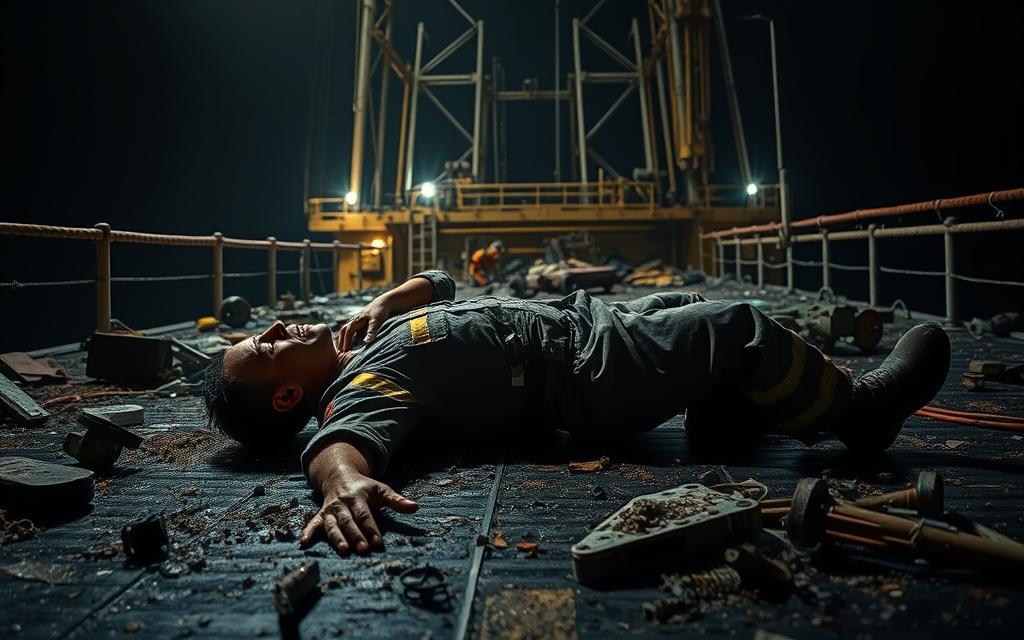
Blast exposures and machinery malfunctions frequently cause third-degree burns requiring multiple surgeries. Spinal cord trauma from falls can lead to partial paralysis, while crushed limbs often result in amputations. A 2023 study found 41% of survivors require assistive devices for basic mobility.
These physical limitations create career-ending barriers. Former derrick operators with reduced grip strength or offshore cooks with limited mobility face permanent job displacement. Many must retrain for less demanding roles, often at lower pay grades.
| Injury Type | Average Recovery | Work Impact |
|---|---|---|
| Traumatic Brain Injury | 18-36 months | Cognitive limitations |
| Compound Fractures | 6-12 months | Reduced load capacity |
| Electrical Burns | 24+ months | Nerve damage |
Emotional, Financial, and Personal Consequences
Medical bills for burn treatments often exceed $500,000, while home modifications for wheelchair access average $30,000. Lost income compounds stress, with 68% of families reporting relationship strain during recovery.
Post-traumatic anxiety affects 53% of survivors according to maritime health data. One Gulf Coast worker described struggling with nightmares years after a drilling site explosion: “I can’t hear loud noises without reliving the blast.”
These layered challenges underscore why comprehensive legal strategies address both economic losses and quality-of-life reductions. Proper documentation of all impacts strengthens compensation claims.
Oil Rig Injury Compensation Attorneys: Your Legal Advocates
When offshore incidents occur, specialized legal teams become lifelines for workers navigating complex aftermaths. Firms like Morgan & Morgan bring 35+ years of maritime case expertise to these high-stakes situations, securing over $15 billion for clients since 1988.
Leveraging Decades of Maritime Injury Experience
Seasoned professionals dissect every aspect of workplace incidents. They review maintenance logs, safety protocols, and witness accounts to identify patterns of negligence. A 2023 case involving faulty blowout preventers resulted in a $4.2 million settlement after attorneys proved repeated inspection failures.
Strategies for Building a Robust Legal Case
Effective approaches include:
- Reconstructing incidents with industrial safety experts
- Linking violations to OSHA maritime standards
- Calculating future medical needs through vocational analysts
One Gulf Coast firm recently used drone footage to demonstrate how corroded guardrails contributed to a platform fall. This evidence helped secure compensation for lost wages and home healthcare costs.
Proven experienced offshore accident attorneys combine technical knowledge with relentless advocacy. They negotiate while clients heal, ensuring claims address both immediate bills and lifelong challenges.
Navigating the Legal Process for Oil Rig Injury Claims
Understanding legal protections empowers workers to act decisively after offshore incidents. Federal laws create distinct frameworks for pursuing justice, but jurisdictional boundaries often blur. Knowledgeable professionals help bridge this gap.

Core Legal Protections for Maritime Workers
Three key laws govern offshore cases:
| Law | Scope | Key Benefit |
|---|---|---|
| Jones Act | Crew members | Covers negligence claims |
| OCSLA | Fixed platforms | Extends state workers’ comp |
| DOHSA | Fatal accidents | Allows family claims |
For example, a crane operator on a floating platform could use the Jones Act if faulty machinery caused harm. Those on fixed structures might combine OCSLA with state laws.
Evidence Collection Strategies
Building strong cases requires immediate action:
- Photograph defective safety gear within 48 hours
- Secure maintenance logs showing inspection gaps
- Obtain coworker statements before memories fade
One 2023 case succeeded because the worker preserved a corroded harness buckle. This physical proof showed repeated safety violations.
Jurisdictional Challenges
Location determines applicable laws:
| Factor | Onshore | Offshore |
|---|---|---|
| Governing Law | State workers’ comp | Maritime statutes |
| Filing Deadline | 1-3 years | 3 years (Jones Act) |
| Evidence Types | Incident reports | Vessel maintenance records |
Workers should file a claim for offshore incident promptly. Delays risk losing critical proof like weather data or equipment calibration reports.
Experienced legal teams navigate these layers while calculating future medical expenses and lost wages. Their expertise often makes the difference between denied claims and six-figure settlements.
Conclusion
Offshore accidents leave families grappling with physical suffering, emotional strain, and financial instability. The road to recovery demands more than medical care—it requires holding negligent parties accountable through precise legal action.
Specialized legal teams dissect workplace safety failures and maritime regulations to build compelling claims. Their expertise turns complex evidence—equipment records, witness accounts, medical reports—into clear proof of employer responsibility. This approach helps secure funds for ongoing treatments, lost wages, and life adjustments.
Delays risk losing critical proof. Reach out to a trusted firm today. Many offer free consultations to review your case details and explain next steps. Taking swift action protects your right to rebuild your life with dignity and stability.






Leave a Reply