


Life-altering wounds often extend beyond skin-deep damage. When trauma disrupts daily life, navigating medical bills and insurance hurdles can feel overwhelming. This is where specialized legal guidance becomes critical for protecting your rights and securing fair outcomes.
Severe tissue damage cases require meticulous attention to long-term care costs and emotional distress. Unlike generic attorneys, professionals focused on these cases understand how to link medical evidence to legal strategies. They assess liability nuances, from workplace hazards to defective products, ensuring every factor gets proper consideration.
This guide explores practical steps for rebuilding stability after traumatic events. You’ll learn how experienced advocates streamline documentation, negotiate settlements, and prioritize your recovery. We’ll break down timelines, treatment options, and financial planning tools tailored to unique circumstances.
Key Takeaways
- Specialized attorneys focus on connecting medical needs with legal strategies
- Cases often involve complex liability assessments beyond surface-level facts
- Long-term financial stability requires early documentation of all impacts
- Most consultations include free case evaluations to clarify options
- Proactive legal steps prevent insurers from undervaluing recovery costs
Understanding Burn Injuries and Their Impact
Traumatic tissue damage reshapes lives in ways many never anticipate. Beyond visible wounds, survivors often face hidden battles that linger long after initial treatment ends. These challenges demand comprehensive support systems to address both physical recovery and emotional resilience.
Visible and Invisible Scars
Severe tissue harm can lead to permanent scarring and limited mobility. Nerve damage may cause chronic discomfort, while infection risks complicate healing. Many survivors require multiple surgeries over years, disrupting work and personal relationships.
Hidden Costs of Recovery
Emotional struggles like anxiety or depression frequently accompany physical trauma. A recent study found 42% of survivors experience sleep disturbances months after treatment. Financial strain compounds these issues, with ongoing therapies costing thousands annually.
Consider a factory worker requiring skin grafts and counseling. Their situation highlights how lost income and medical bills create lasting instability. Proper documentation of these impacts strengthens efforts to secure fair resolutions for affected individuals.
Common Causes of Burn Injuries
Many devastating accidents stem from everyday environments people trust. From kitchen mishaps to workplace hazards, severe tissue damage often results from preventable scenarios. Identifying root causes helps victims pursue accountability and recover stability.

House Fires and Defective Products
The U.S. Fire Administration reports over 350,000 home fires annually, many caused by faulty wiring or appliances. Recalled space heaters and malfunctioning e-cigarettes demonstrate how trusted items become dangers. Product liability cases often reveal design flaws that manufacturers overlooked during safety tests.
Children face particular risks from scalding liquids or unattended stoves. A 2023 study showed 18% of pediatric trauma cases involved hot water spills. Proper documentation of product defects strengthens efforts to address these preventable harms.
Automobile and Industrial Accidents
Collisions involving fuel tank ruptures account for 7% of vehicle-related thermal damage. The NHTSA found compromised safety systems contributed to 60% of these incidents. Industrial settings present unique risks, with chemical exposures causing 23% of workplace tissue harm cases.
Electrical arc flashes in construction zones or refinery explosions show how complex these situations become. Average settlements for severe cases exceed $500,000 when negligence is proven. Early consultation with professionals ensures all factors get reviewed before deadlines pass.
Determining Liability in Burn Injury Cases
Uncovering responsibility requires piecing together events like a puzzle. Legal teams analyze timelines, safety protocols, and product designs to pinpoint where protections failed. This process often reveals overlooked factors that shifted risks onto unsuspecting individuals.
Establishing Negligence and Fault
Four elements must exist for negligence claims:
- Duty of care – Did the defendant owe safety obligations?
- Breach – Were established standards violated?
- Causation – Did actions directly cause harm?
- Damages – What losses occurred from the incident?
For example, landlords ignoring fire codes or manufacturers using flammable materials often breach these duties. Evidence like maintenance records or safety inspection reports becomes critical.
Identifying Multiple Responsible Parties
Complex cases often involve several at-fault groups:
- Property owners who ignored hazards
- Companies distributing defective equipment
- Employers failing to provide protective gear
A 2022 industrial explosion case showed three liable parties: a chemical supplier, site contractor, and safety inspector. Each contributed to unsafe conditions leading to catastrophic fires.
Demonstrating pain and suffering requires medical journals and therapist notes. Courts assess how physical trauma altered daily routines or mental health. Structured arguments connect these impacts to achievable restitution amounts.
How a Burn Injury Compensation Claim Lawyer Can Help You
Navigating complex legal systems after severe accidents demands more than generic advice. Seasoned professionals focus on building airtight cases while prioritizing your well-being. Their expertise bridges medical realities with legal strategies to secure resources for rebuilding lives.

Skilled teams handle overwhelming paperwork and evidence collection efficiently. They reconstruct timelines using surveillance footage, witness statements, and expert testimony. This approach proved vital in a 2022 case where attorneys secured $4.3 million for a family after defective equipment caused catastrophic harm.
Compassionate care remains central throughout the process. Regular updates and clear explanations help reduce stress during treatment phases. One firm’s collaboration with rehabilitation specialists helped a client access advanced therapies while their case progressed.
Most consultations involve free case reviews to explore options confidentially. During these meetings, professionals assess liability factors and outline potential paths forward. Many families find this clarity empowers them to focus on healing rather than legal complexities.
Types and Severity of Burn Injuries
Skin injuries vary widely in their depth and healing challenges. Accurate classification guides treatment plans and shapes outcomes for affected individuals. Medical professionals use standardized systems to assess tissue damage layers and predict recovery timelines.
First, Second, and Third Degree Burns
First-degree injuries affect only the outer skin layer, causing redness and mild pain. These typically heal within a week with basic care. Second-degree damage penetrates deeper, creating blisters and requiring weeks of specialized treatment.
Third-degree trauma destroys all skin layers, often needing grafts or surgery. Nerve endings may be damaged, leading to numbness alongside visible scarring. Healing times exceed months, with higher infection risks.
| Degree | Skin Layers Affected | Treatment | Legal Impact |
|---|---|---|---|
| First | Epidermis | Topical creams | Minor claims |
| Second | Dermis | Dressings + antibiotics | Moderate cases |
| Third | Hypodermis | Surgery + rehab | Complex liability |
Additional Categories and Complications
Fourth-degree injuries reach muscles or bones, often requiring amputation. Electrical trauma causes internal damage invisible to the naked eye. Chemical exposure leads to ongoing tissue destruction without immediate pain signals.
Infection risks double when injuries cover over 15% of body surface. Scar contractures limit mobility, while psychological distress affects 1 in 3 survivors. Proper documentation of these factors strengthens efforts to address long-term needs.
Medical reports detailing injury depth directly influence liability assessments. A consultation with specialists helps match clinical findings to legal strategies. This alignment ensures fair resolutions for those rebuilding stability after life-changing events.
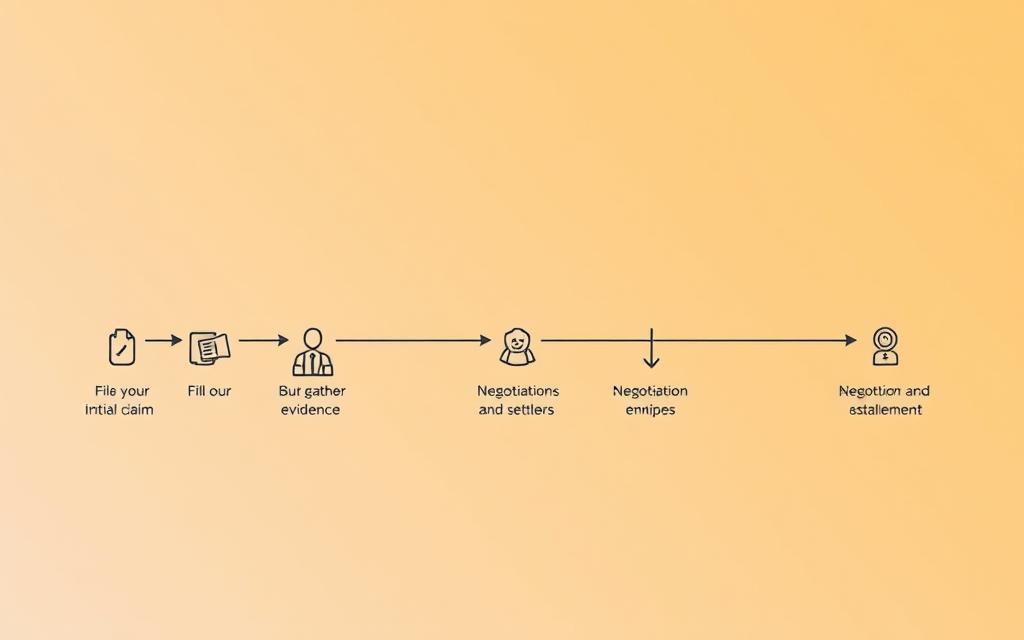
Navigating the Claims Process for Burn Injuries
Effective navigation through legal procedures requires understanding critical steps that protect your rights. Acting swiftly ensures evidence remains intact while creating a clear path toward resolution. Proper guidance helps avoid missteps that could undermine your position.
Collecting Evidence and Documentation
Begin by photographing affected areas from multiple angles within 48 hours. Capture environmental factors like faulty wiring or spilled chemicals. Secure contact details from witnesses before memories fade.
Obtain official reports from authorities and medical records detailing the severity of harm. Preserve damaged items like clothing or equipment as physical proof. Time plays a crucial role—waiting risks lost evidence or expired filing deadlines.
Dealing with Insurance Companies
Insurers often minimize payouts by requesting recorded statements prematurely. Avoid accepting initial offers without professional review. Many adjusters exploit gaps in documentation to dispute fault.
Car accident cases involving fuel leaks or electrical fires demand specialized attention. Track all communications and submit forms by certified mail. Demonstrating fault clearly strengthens negotiations for fair settlements covering long-term needs.
Prioritize medical evaluations even if symptoms seem minor initially. Hidden complications from chemical exposure or smoke inhalation may emerge later. Structured approaches prevent insurers from undervaluing the true impact of trauma.
Financial Considerations and Potential Damages
The financial aftermath of severe trauma often creates lasting challenges for families. Medical bills for specialized treatments like skin grafts or reconstructive surgeries can exceed $200,000 initially, with rehabilitation adding $50,000 annually. Many face reduced earning capacity for years due to prolonged recovery periods or permanent disabilities.
Breaking Down Recovery Costs
Damages typically cover three key areas:
| Category | Examples | Average Cost Range |
|---|---|---|
| Medical | Surgery, therapy, medications | $100k – $1.5M+ |
| Income Loss | Wages, promotions, benefits | $20k – $800k+ |
| Non-Economic | Emotional distress, lifestyle changes | Case-specific valuation |
One landmark 2023 case secured $8.5 million for a warehouse worker exposed to chemical spills. The settlement addressed future surgeries and 15 years of projected income loss. For a deeper exploration of these factors, consider reviewing resources on understanding compensation for pain and suffering.
Personal injury law recognizes both tangible expenses and intangible impacts. Courts may award restitution for:
- Ongoing physical therapy requirements
- Adaptive home modifications
- Counseling for anxiety or PTSD
Seasoned professionals help families navigate these complex calculations. Their expertise proves vital when insurers dispute long-term care projections or downplay quality-of-life reductions. Early intervention often leads to more comprehensive resolutions that address needs across multiple years.
Treatment, Recovery, and Ongoing Complications
Medical interventions for severe tissue damage evolve dramatically from emergency care to rehabilitation. Proper care protocols directly influence healing timelines and quality-of-life outcomes. Each phase presents unique challenges requiring specialized expertise.
Critical Care Phases Compared
Initial response focuses on preventing further harm. Cool running water (15-25°C) applied for 20 minutes reduces tissue destruction. Sterile dressings protect exposed areas from contamination during transport to facilities.
Long-term strategies address functional restoration and scarring. Skin grafts become necessary when natural healing proves insufficient. Patients often require 3-5 surgical procedures over 18 months to restore mobility.
| Treatment Phase | Focus Areas | Common Procedures | Duration |
|---|---|---|---|
| Immediate | Pain control, infection prevention | Debridement, IV fluids | 0-72 hours |
| Intermediate | Wound closure, nutrition | Grafting, dressings | 1-12 weeks |
| Long-Term | Rehabilitation, mental health | Physical therapy, counseling | 6+ months |
Chronic complications affect 38% of survivors according to Johns Hopkins research. Respiratory distress from smoke inhalation may surface weeks post-exposure. Nerve damage often leads to persistent discomfort requiring medication management.
Faulty equipment or defective product designs can worsen outcomes. A 2023 recall of overheating medical devices demonstrated how poor manufacturing extends recovery times. Documenting these factors helps personal injury professionals build stronger cases.
Collaborating with a respected law firm ensures treatment records align with legal requirements. Experienced injury lawyer teams connect clinical needs with achievable restitution goals. This coordination proves vital when insurers challenge ongoing care necessities.
Client Success Stories and Case Results
Transformative legal outcomes reshape futures for those facing life-altering trauma. Proven strategies have secured resources for families to rebuild after catastrophic events. Let’s examine landmark cases demonstrating how meticulous preparation delivers justice.
Record-Setting Verdicts and Settlements
Greene Broillet & Wheeler, LLP achieved a $12 million resolution for a factory worker exposed to faulty machinery. The defective equipment caused extensive tissue damage requiring 18 surgeries. Their team proved the manufacturer ignored safety protocols during production.
| Case Type | Settlement | Key Factors |
|---|---|---|
| Defective Product | $8.75M | Overheated medical device caused third-degree harm |
| Auto Accident | $6.2M | Fuel tank failure led to chemical exposure |
| Workplace Hazard | $4.3M | Employer neglected electrical safety standards |
Easton & Easton’s $9.8 million verdict supported a child harmed by scalding water in a rental property. The landlord had disregarded repeated complaints about unsafe water heaters. This outcome funded lifelong therapy and adaptive living arrangements.
One client shared: “The team fought tirelessly so I could focus on healing. Their attention to medical details made all the difference.” These victories highlight how structured advocacy helps individuals obtain financial recovery while prioritizing health.
Thorough documentation of treatment costs and liability evidence remains critical. Professionals analyze workplace logs, product designs, and safety violations to build unshakable arguments. This approach transforms complex challenges into achievable resolutions.
Choosing the Right Legal Team and Consultation
Selecting skilled advocates after traumatic events requires careful evaluation of both expertise and empathy. The right professionals blend technical knowledge with genuine care for clients’ well-being. This balance proves critical when handling cases involving thermal damage from preventable incidents.
Prioritizing Proven Excellence
Look for teams recognized by organizations like Martindale-Hubbell or Super Lawyers. These honors reflect peer respect and consistent results. Firms with multi-decade experience often handle complex liability matters more effectively.
| Evaluation Factor | Top Firms | Average Firms |
|---|---|---|
| Peer Reviews | AV Preeminent Rated | Limited Recognition |
| Case Results | $1M+ Settlements | Under $500k Resolutions |
| Consultation Process | 24-Hour Response | 5+ Day Delays |
Successful groups demonstrate specific experience with cases involving thermal harm from defective products or workplace hazards. Review their published outcomes for similarities to your situation. One firm secured $2.8 million for a client harmed by faulty kitchen equipment—a scenario mirroring many household incidents.
Personal attention matters during free initial consultations. Observe whether attorneys ask detailed questions about treatment timelines and emotional impacts. Teams investing time early often build stronger cases later.
Schedule meetings with multiple firms to compare approaches. Many offer contingency fees, aligning their success with yours. This structure lets you focus on recovery while professionals handle negotiations.
Conclusion
Recovering from catastrophic events demands more than medical care—it requires a roadmap to justice. This guide outlined how physical trauma, hidden costs, and liability complexities create lasting challenges. From workplace hazards to defective products, every case demands meticulous evaluation of long-term needs.
Injury law serves as a critical tool for securing resources to rebuild lives. Experienced attorneys bridge medical realities with legal strategies, ensuring insurers address full recovery costs. Their expertise transforms overwhelming processes into structured paths toward stability.
For those seeking clarity, our guide on understanding injury claims processes offers detailed insights. Taking proactive steps now can safeguard your rights and future well-being. Reach out for a confidential consultation to explore options tailored to your unique situation.






Leave a Reply